
Fluid Wire Robotics (FWR), an Italian deep-tech spin-off from Scuola Superiore Sant’Anna in Pisa developing robotic systems for extreme environments, has been selected for €2.5 million in grant funding under the European Innovation Council (EIC) Accelerator.
Since 2024, FWR is incubated at I3P, the Innovative Companies Incubator of Politecnico di Torino, and is part of the ESA BIC Turin incubation program, managed by I3P in collaboration with the Italian Space Agency (ASI), the European Space Agency (ESA), Politecnico di Torino and LINKS Foundation. The company’s mission is to enable robotic remote and unmanned inspection, maintenance, repair, and assembly in harsh, unstructured environments.
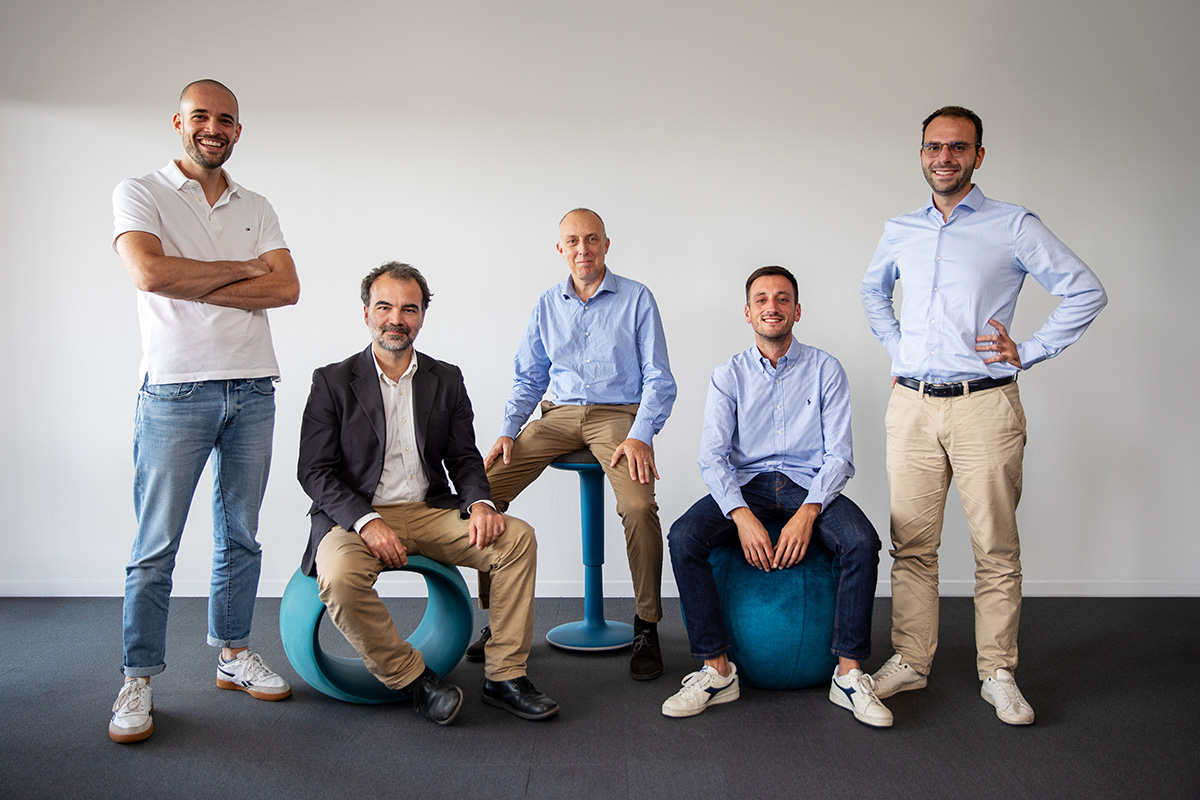
The start-up’s proprietary Fluid Wire technology relocates actuators and electronics from the manipulator to a remote Actuation Box. This architecture enables fully electric robotic systems capable of operating in radiation, vacuum, explosive, and high-temperature environments, while maintaining cost efficiency, ease of deployment, and simplified maintenance.
The EIC Accelerator is the European Union’s flagship programme for high-impact, high-risk innovation in start-ups and SMEs. In one of its most competitive calls, the challenge titled “Innovative in-space servicing, operations, robotics and technologies for resilient EU space infrastructure”, Fluid Wire Robotics has been selected as one of a small group of European companies entrusted with strengthening the resilience of EU space infrastructure. Together with Adaptronics, another start-up incubated at I3P and ESA BIC Turin selected for the EIC Accelerator, Fluid Wire Robotics is one of only three Italian companies included among the 61 small and medium-sized enterprises from 17 countries benefiting from the latest round of EIC funding.
Space infrastructure underpins the economy and security, from communications and navigation to Earth observation. Yet, most satellites were never designed to be serviced, upgraded or safely de-orbited. As orbital traffic grows, routine, cost-effective in-orbit operations are becoming essential to protect high-value assets and limit space debris.
Those operations hinge on one critical capability: reliable, dexterous robotic manipulation. In orbit, this includes tasks such as:
satellite inspection, repair, upgrade and life-extension;
capture and removal of debris;
in-orbit assembly of new structures.
Today, however, most space robotic arms are bespoke systems for one-off missions, with costs and lead times misaligned with the emerging in-orbit servicing market. This is both a commercial and strategic bottleneck: without scalable, European-built manipulation capabilities, Europe risks relying on non-European providers for critical in-orbit services and space resilience.
FWR addresses this gap with a new robotics architecture built around a different approach to actuation and force transmission. Based on its Fluid Wire actuation patented technology, motors, sensors and electronics are relocated from the arm into a compact actuation unit inside the spacecraft body.
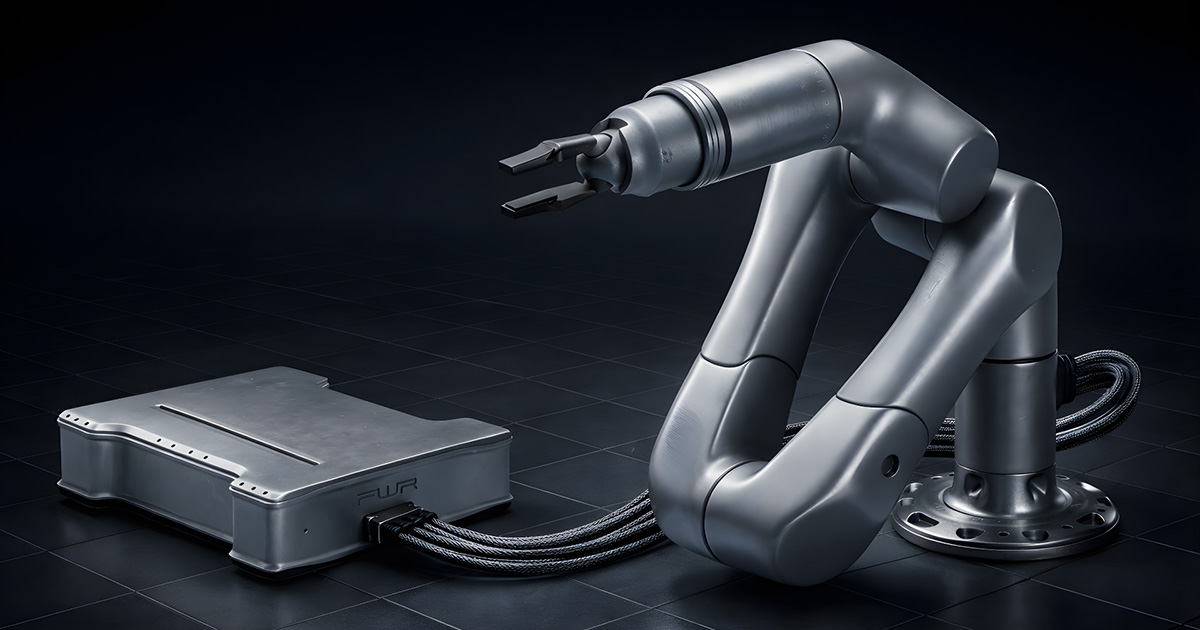
The external arm works as a largely passive, rugged structure exposed to the harsh environment, while motion, forces and torques are transmitted through Fluid Wires, avoiding sensitive components inside the arm itself.
For in-orbit space operations, this translates into several distinctive elements:
lower joint mass and inertia for stable, precise proximity operations;
built-in force interaction without fragile force/torque sensor stacks;
simpler thermal and radiation design with less exposure of sensitive hardware;
modular, cost-effective layouts that work across servicing vehicles and satellites.
As a result, FWR’s robotic manipulators can be deployed as a reusable subsystem for in-orbit servicing spacecraft, enabling safer, more cost-effective operations.
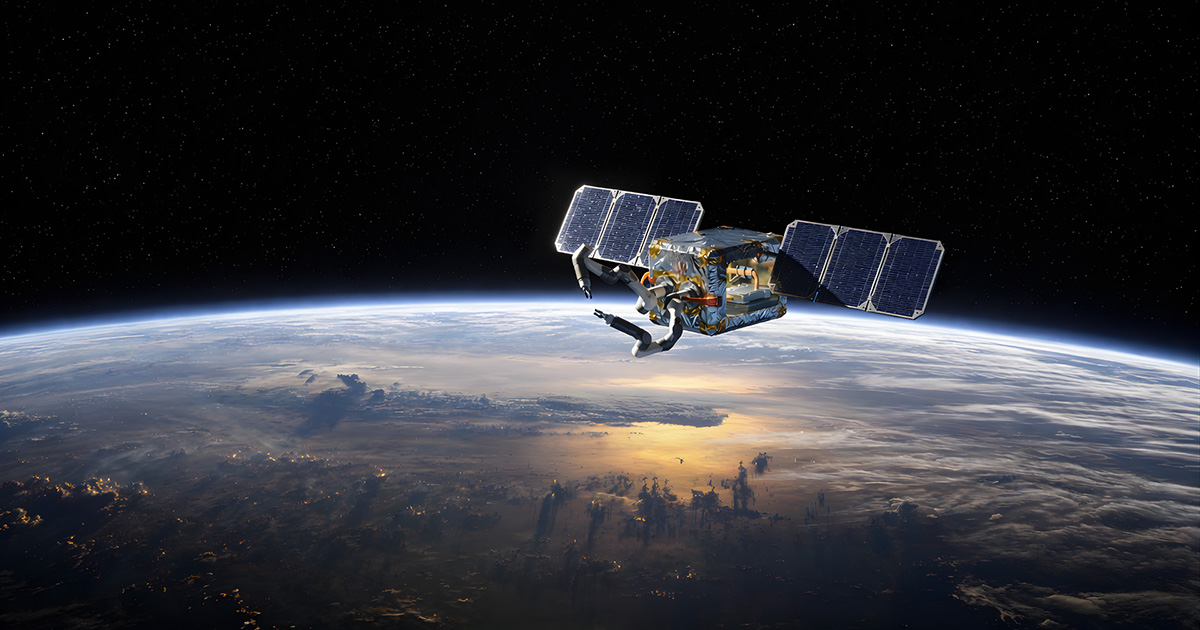
The Fluid Wire architecture has already been validated at extreme environmental conditions - high radiation doses, high temperatures and in thermal-vacuum - representative of orbital missions. EIC Accelerator funding is designed to bridge the gap between this proven prototype and a commercially deployable, flight-validated product. The grant will enable FWR to:
design and build a space-grade qualification model of its manipulation subsystem;
execute a full qualification campaign, including vibration, thermal-vacuum and radiation testing;
carry out an in-orbit demonstration mission to retire key technical and commercial risks;
prepare initial production and scale-up of early flight models.
FWR is developing its space roadmap with a clear integration and validation path, working alongside European industrial actors to align interfaces and mission requirements. In this context, Fluid Wire Robotics has been selected as one of the winning start-ups of the "New perspectives for space inspection" challenge, launched through Solvers Wanted, Leonardo's technology scouting platform for advanced space robotics solutions in inspection, maintenance and debris management. These initiatives, together with other European industrial collaborations, are helping to mature FWR's manipulation architecture towards flight qualification, in-orbit demonstration and early commercial applications.
Fluid Wire Robotics’ manipulators are designed to become part of a sovereign European toolkit for in-orbit servicing and space logistics. By enabling inspection, servicing, debris-mitigation and assembly with European-built hardware, the company contributes directly to the EIC challenge axes of in-orbit servicing and maintenance, in-space transportation and space-based resilience. These capabilities support longer-lived infrastructure, more sustainable use of orbit and reduced dependency on non-European servicing solutions.
“Space is moving from ‘launch-and-leave’ to continuous operations where assets are maintained, upgraded and protected like any critical infrastructure on Earth,” said Marco Bolignari, CEO and Co-Founder of Fluid Wire Robotics. “This EIC Accelerator selection is a strong signal that Europe wants scalable, sovereign capabilities for in-orbit servicing and assembly. Our job now is to turn a proven architecture into flight heritage so that satellite operators and in-space service providers can rely on European robotics when resilience matters most.”